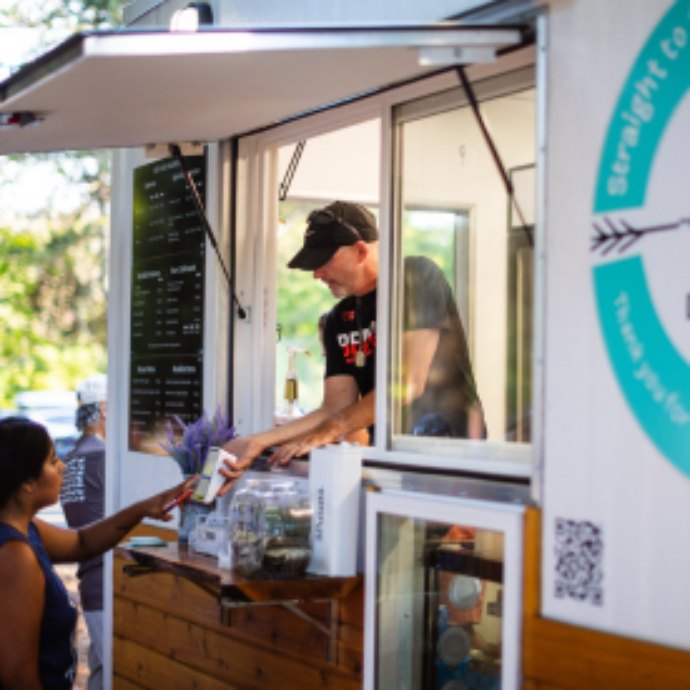
Food cart pod operators can now apply to set up shop in Tualatin after new regulations took effect Oct. 28.
The city's food cart planning page lays out the application process and requirements for pods in six commercial zones, including downtown Tualatin and the Bridgeport area.
No pod has opened yet, and the city says operators will need time to apply, meet requirements and get set up.
As we reported Oct. 9, the Tualatin City Council unanimously adopted Ordinance 1461-26 on Sept. 28.
The ordinance replaced a 2017 rule that allowed only one food cart per site.
What the rules require
Any grouping of more than one cart counts as a pod under the new code.
Every pod must provide permanent restrooms, a covered seating area with weather protection and connections to city utilities, according to the city's planning page.
Pods can hold up to 20 carts before operators must file for a conditional use permit reviewed by the Planning Commission.
The zones where pods are allowed are General Commercial, Central Commercial, Office Commercial, Mixed Use Commercial, Neighborhood Commercial and Basalt Creek Employment.
Individual food carts get a separate list of zones, mostly industrial and institutional.
Those operators need a Washington County Environmental Health Department license and a city business license, along with self-contained water and wastewater tanks.
How to apply
The city's Planning Division must approve any food cart pod or individual cart before it can operate. The review level depends on the proposal's size. Individual carts and minor changes to existing pods go through a staff-level review with no public notice.
New pods and expansions require staff review with public notice. Pods proposing 20 or more carts need Planning Commission approval.
Interested operators can contact the Planning Division at (503) 691-3026 or [email protected].
Smaller pods still unresolved
The council adopted the ordinance without a separate tier for pods of two to four carts. The Tualatin Planning Commission had recommended a tiered system at its Aug. 19 meeting that would have eased requirements for smaller pods, allowing portable toilets instead of permanent plumbing, Tualatin Life first reported.
Council President Valerie Pratt pushed to pass the ordinance as written. "I think it would be great to move forward with this ordinance so we have it in the books and we can get that beautiful downtown food cart pod we all want," Pratt said at the Sept. 28 meeting, according to Tualatin Life.
Councilor Christen Sacco said she was "conflicted about a smaller tier" and worried about water and cleanliness.
Mayor Frank Bubenik took a different view, suggesting a small pod could serve as a "proof of concept" to test demand before pursuing a larger downtown pod, according to the same report.
The council directed staff to return for a follow-up discussion on smaller pods at a future work session. No date for that session has been posted.
Background
The push for food cart pods grew out of a 2025 downtown identity study that found strong community support for the idea.
Survey respondents called a downtown food cart pod a "must-have," according to Tualatin Life.
The city's findings and analysis document noted that many surrounding communities already permit food cart pods that have become community destinations.
At an April 27 work session, the council directed staff to draft code allowing pods in commercial zones with standards for covered seating and permanent bathrooms, according to the findings document.
Before the ordinance, pod provisions were limited to one development in the Basalt Creek Employment zone along Grahams Ferry Road, according to the city's project page. No pod was operating there.
The downtown revitalization project's Phase 3, which covers urban design and an implementation plan, began Oct. 7 and is scheduled to run through spring 2028. A pod outside downtown, in any of the other permitted commercial zones, can apply now.