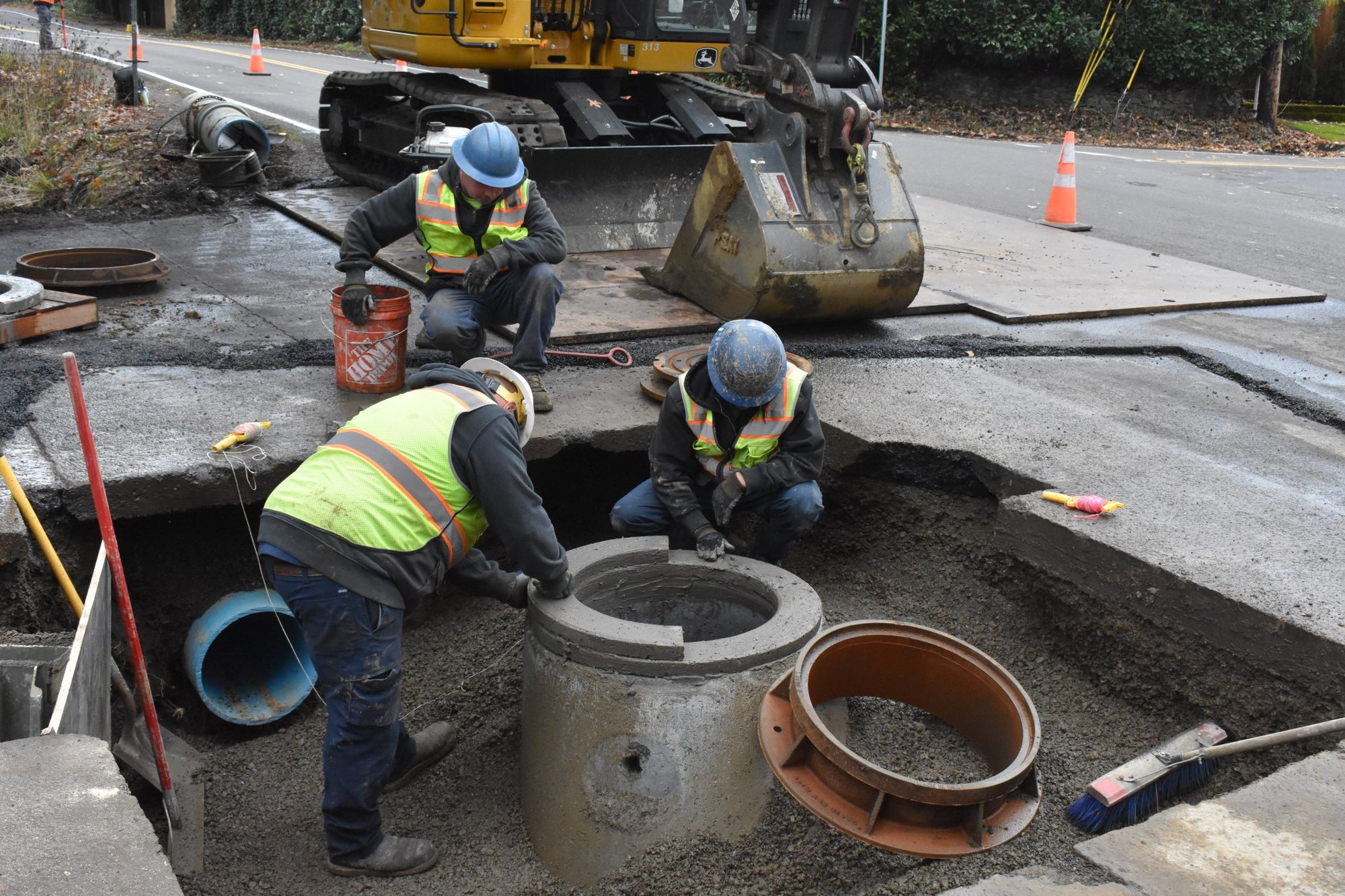
Clean Water Services is stepping up sewer pipe repairs across Washington County to stop groundwater and rainwater from leaking into the sanitary sewer system, the district announced in a Nov. 16 post.
The problem is called Inflow and Infiltration, or I&I. When water enters sewer pipes through cracks, broken joints or damaged maintenance hole covers, it mixes with sewage and increases the volume headed to treatment plants. In severe cases, the extra water can overwhelm the system and force sewage to overflow into the environment or back up into homes through toilets and drains, according to the district.
Many of the sanitary sewer and stormwater pipes in Washington County are decades old. Some are a century old, according to Clean Water Services. Tree roots can push through a pipe and let groundwater seep in. Rain can flow into an improperly installed maintenance hole cover.
Clean Water Services operates 1,900 miles of sanitary sewer pipe in the Tualatin River Watershed, carrying wastewater from more than 600,000 homes and businesses to four treatment facilities. That system is separate from 1,500 miles of stormwater pipe.
The district said communities across the watershed should expect to see more construction projects in their neighborhoods as it begins major infrastructure improvements.
One project already underway sits in Tualatin. Phases 3 and 4 of the Martinazzi Sewer Upsizing project will install 3,370 feet of new sanitary sewer main piping and 19 new manholes along Martinazzi Avenue, according to the city of Tualatin's project page. The project aims to address capacity limitations and prevent potential overflow locations. Construction started in summer 2026, and Martinazzi Avenue at Blake Street has been closed to through traffic for sewer work. Residents along the route can expect noise, vibration and detours during work hours, 7 a.m. to 6 p.m. Road resurfacing of Martinazzi Avenue is planned once digging wraps up.
The infrastructure push comes after the Clean Water Services Board of Directors voted unanimously on June 9 to adopt the Fiscal Year 2026-27 budget of $675.3 million and new rates, according to a CWS budget announcement. The board also adopted a Capital Improvement Plan for Fiscal Years 2027 through 2031.
Tigard and Tualatin residents see sewer and stormwater costs on their city utility bills. Both cities are among seven partner cities that provide local sewer services within their limits and set their own local rates. The adopted regional rate increase for the current fiscal year is 4 percent, less than $2 per month for a typical household, according to Clean Water Services. Chief Financial Officer Kathleen Leader said the agency worked to "put together a strong, fiscally responsible budget," citing cost-saving measures including no added full-time staff positions.
The district's long-term planning is guided by a Sanitary Sewer Master Plan, updated roughly every 10 years with a 20-year planning horizon. The East Basin Master Plan, adopted by the CWS Board on April 5, 2022, covers the conveyance system and Durham treatment facility serving Tigard, Tualatin, Sherwood, King City, Durham and portions of Beaverton, Portland and Lake Oswego, according to the district's assessment and planning page.
Homeowners can also help. Clean Water Services recommends having a professional plumber evaluate private sewer laterals and gutter downspouts to make sure they are properly connected and free of tree root damage. Residents can view active projects at the district's online portal at engage.cleanwaterservices.org.