
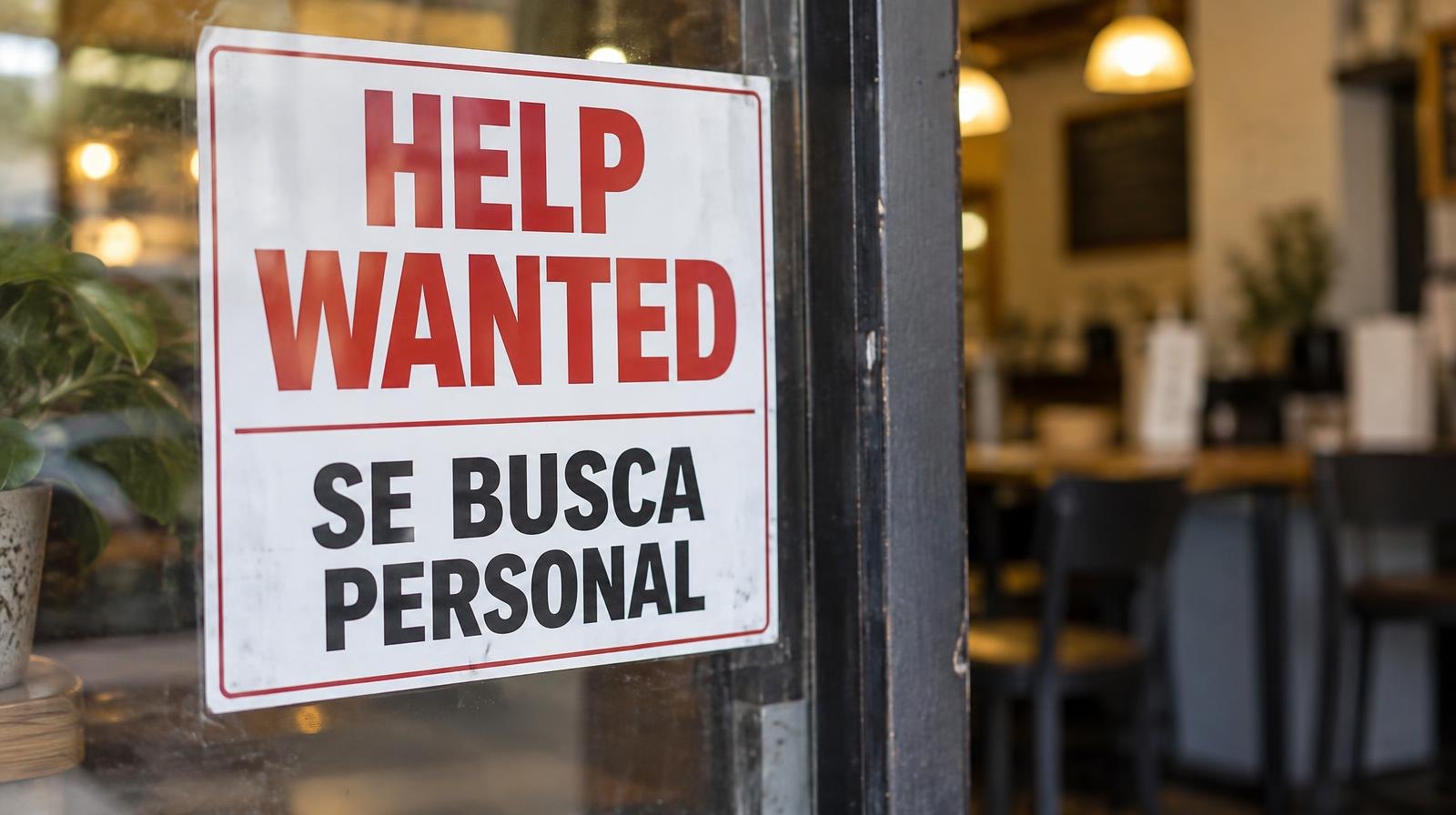
Josue Palma, a sophomore at Tualatin High School, said his ability to speak both Spanish and English helped him land job interviews at a time when teens across the country are struggling to find work.
Palma shared his experience with The Wolf, Tualatin High's student newspaper, in a Spanish-language article published Nov. 10. He told the paper he does not have a job right now but has held one before and has been called in for interviews. He attributed that success to his bilingualism, saying it helped companies select him because it allows businesses to reach a wider range of customers.
The article, written by Violet Wilbourn, sports editor at The Wolf, noted that bilingual skills are valued in retail, customer service, hospitality and youth program roles. Local job opportunities for teens exist in Tualatin and Beaverton at coffee shops, seasonal positions and customer-facing businesses, the article said.
A tough market for teens
Federal data backs up the difficulty teens face finding work. The U.S. Bureau of Labor Statistics (BLS) reported in August that the youth unemployment rate for 16- to 24-year-olds was 9.1 percent in July 2026, down from 10.8 percent a year earlier. But the teen job market has shown strain. In April 2026, 5.19 million teens ages 16 to 19 were employed nationwide, down from 5.48 million in April 2025, according to BLS data cited by ABC News. ABC News first reported that the April-to-July 2025 increase in teen employment was the smallest since BLS began tracking the data in 1948.
By October 2026, the BLS employment report put the teenager unemployment rate at 13.9 percent.
A credential for bilingual students
Palma encouraged Spanish-speaking students to take the STAMP assessment through their school to earn Oregon's State Seal of Biliteracy. He told The Wolf the credential looks good on both job applications and college applications.
The STAMP test, short for Standards-based Measurement of Proficiency, was originally created at the University of Oregon's Center for Applied Second Language Studies, according to test maker Avant Assessment. It measures reading, writing, listening and speaking skills and is used to qualify students for Seals of Biliteracy.
Oregon's State Seal of Biliteracy is issued by the Superintendent of Public Instruction to high school graduates who demonstrate high proficiency in English and at least one other language, according to state administrative rules. One stated purpose of the seal is to provide employers a way to identify people with biliteracy skills. Students must complete all graduation requirements and demonstrate Intermediate High or higher proficiency in reading, writing, listening and speaking in each claimed language, according to the 2024 OSSB manual. School district participation is voluntary, and a sponsoring educational institution must submit the request on a student's behalf.
Statewide, Spanish is the predominant home language of current English learners at 75.5 percent, according to Oregon's 2024-25 English Learners report.
Seal submissions are accepted year-round and processed on the first working day after May 1, June 1 and Oct. 1 each year.